From Hospital to Home: Why Adaptive Care Matters

Caregiving is never static. Needs shift from one day to the next, and families often find themselves scrambling to adjust. A loved one may be discharged from the hospital and require intensive support at home. Or a progressive condition may gradually reduce independence, changing the way care must be delivered. In each case, families need tools that can flex with them. That’s where SimpliTend’s adaptive care feature comes in.
How Adaptive Care Supports Hospital Discharge and Recovery
Imagine a loved one returning home after surgery. At first, they may be too weak to manage their own care. A family member steps in, using SimpliTend in the mode designed for caring for someone without a smartphone—coordinating medications, tracking appointments, and managing recovery tasks.
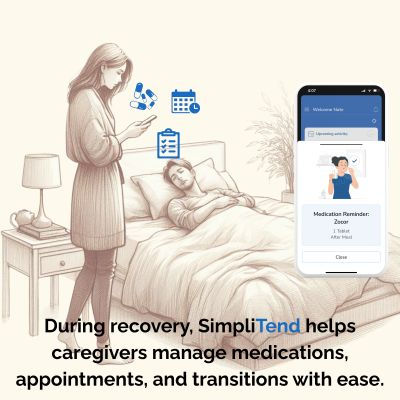
As strength returns, the patient can begin using their smartphone to manage aspects of their care, while the family member monitors remotely and assists as needed. At this stage, the caregiver can upgrade to the caring for someone with a smartphone mode, which not only supports collaboration but also adds important safety features. Families gain access to real-time location tracking, call and app blocking, geofence alerts, and an SOS function—tools that provide reassurance and protection during recovery.
As recovery continues, the patient may eventually transition fully into the caring for myself mode, managing their care independently.
Throughout this journey, Care Partner mode allows friends or relatives to step in—whether to deliver meals, ensure medications are taken, or simply check in—so no one carries the burden alone. Importantly, all care information stays within the app when switching between modes. Families don’t need to re-enter medications, schedules, or notes—SimpliTend ensures continuity, keeping the focus on care rather than data entry.
This adaptive flexibility mirrors the reality of modern healthcare. Hospitals are under pressure to shorten stays, sending patients home sooner. Families often feel unprepared for the responsibility. SimpliTend bridges that gap, providing structure and clarity during a vulnerable transition.
Adaptive Care for Progressive Conditions
Adaptive care is equally powerful for families managing progressive diseases. Early on, when the care recipient is more independent, the caring for someone with a smartphone mode fosters collaboration and dignity. They can manage their own routines while staying connected to a caregiver, with added safety features like geofence alerts and SOS support providing peace of mind.

As the condition advances and phone use becomes difficult, families can shift into the caring for someone without a smartphone mode, ensuring continuity of care without disruption. Again, Care Partner mode provides a safety net, enabling siblings, friends, or neighbors to share responsibilities seamlessly.
This progression highlights the emotional clarity SimpliTend offers. Families don’t have to guess when to switch modes or worry about gaps in support. The app guides them, reducing uncertainty and building trust.
Systemic Impact: Aligning With Healthcare Trends
Healthcare systems are increasingly focused on shorter hospital stays and home-based recovery. SimpliTend’s adaptive care feature aligns perfectly with this trend, reducing readmissions, supporting smoother transitions, and empowering families to manage care confidently.
For employers, this translates into resilience: employees can balance caregiving with work, reducing stress and absenteeism. Adaptive care isn’t just a family benefit—it’s a workforce and healthcare system benefit.
Emotional Clarity and Trust
Caregiving is as much emotional as it is logistical. Families often feel overwhelmed, unsure when to step in or step back. Adaptive care provides peace of mind. By offering clear pathways—caring for myself, caring for someone without a smartphone, caring for someone with a smartphone—SimpliTend removes the guesswork. Families can focus on connection rather than confusion. Patients feel supported without losing dignity. Caregivers feel empowered rather than burdened.
The Future of Caregiving Technology
Adaptive care represents the future of caregiving technology: flexible, inclusive, and deeply human. By meeting families at every stage of the journey, SimpliTend transforms caregiving from a source of stress into a shared act of resilience and connection. It’s not just about managing tasks—it’s about building confidence, reducing burnout, and strengthening networks of support.
As healthcare continues to evolve, one truth remains: care needs will always change. With adaptive care, families don’t have to fear those changes. They can embrace them, knowing SimpliTend will evolve right alongside them.
Learn more at www.SimpliTend.com


Comments